

Precision Power Conditioner (PPC)
A solid-state voltage stabiliser that corrects sags, spikes and swells in under 20 milliseconds — power conditioning without batteries or moving parts. COMPACT's answer wherever a servo stabiliser would traditionally be used.
- Range
- Up to 300 kVA
- Configuration
- Single-phase 5–30 kVA · Three-phase (unbalanced) 10–300 kVA
- Topology
- DSP-controlled IGBT PWM buck-boost — solid state, no moving parts
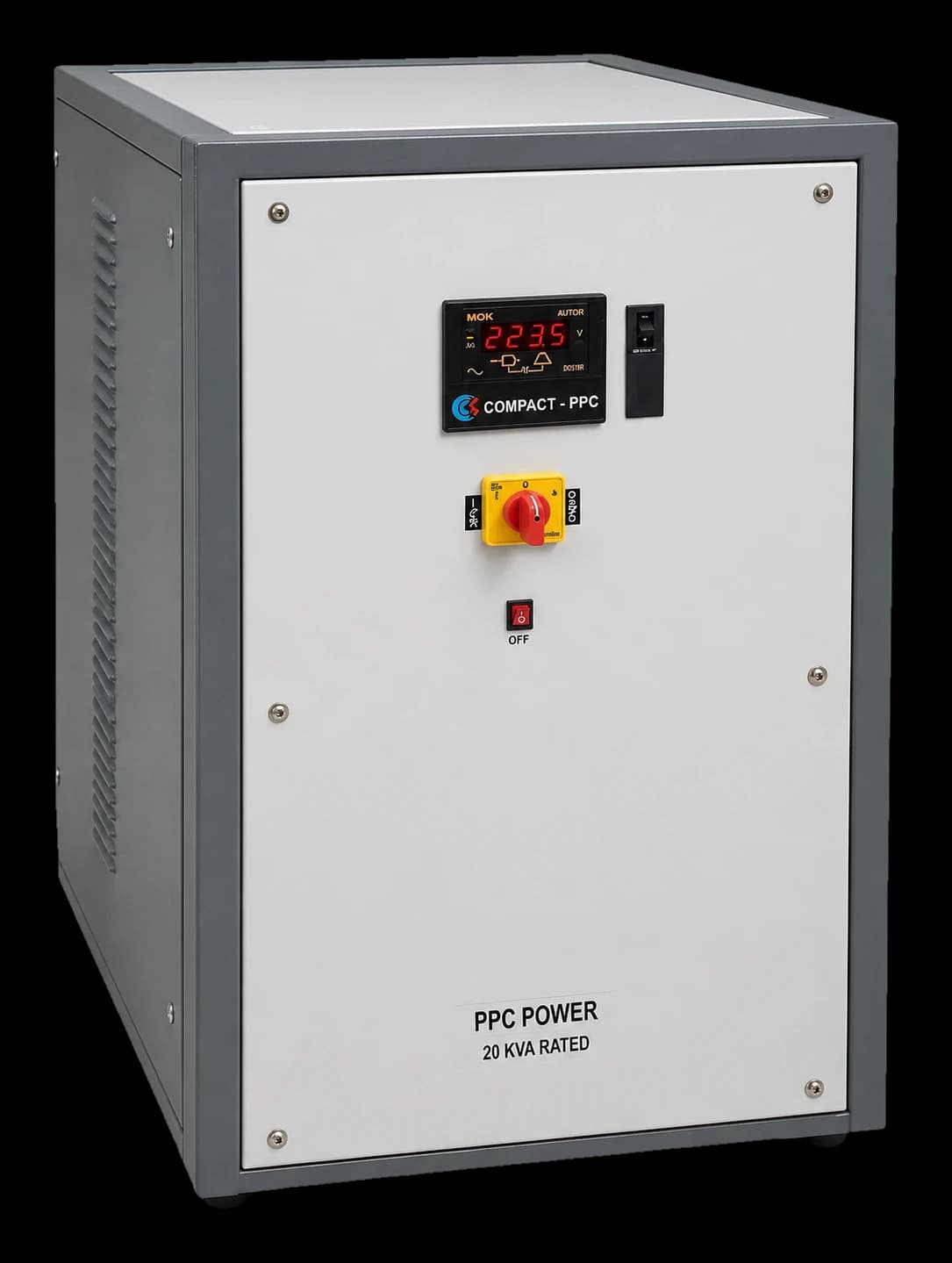
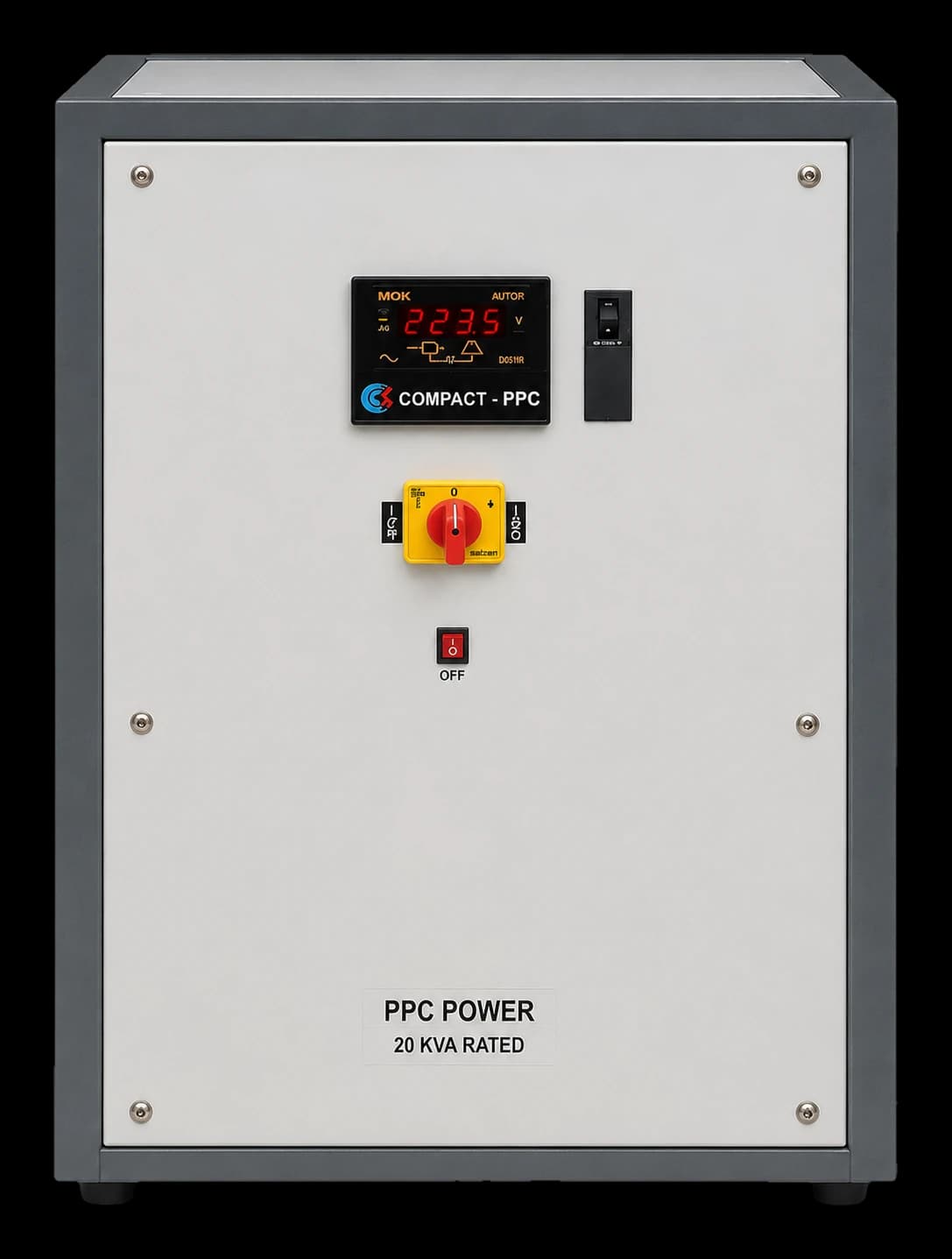
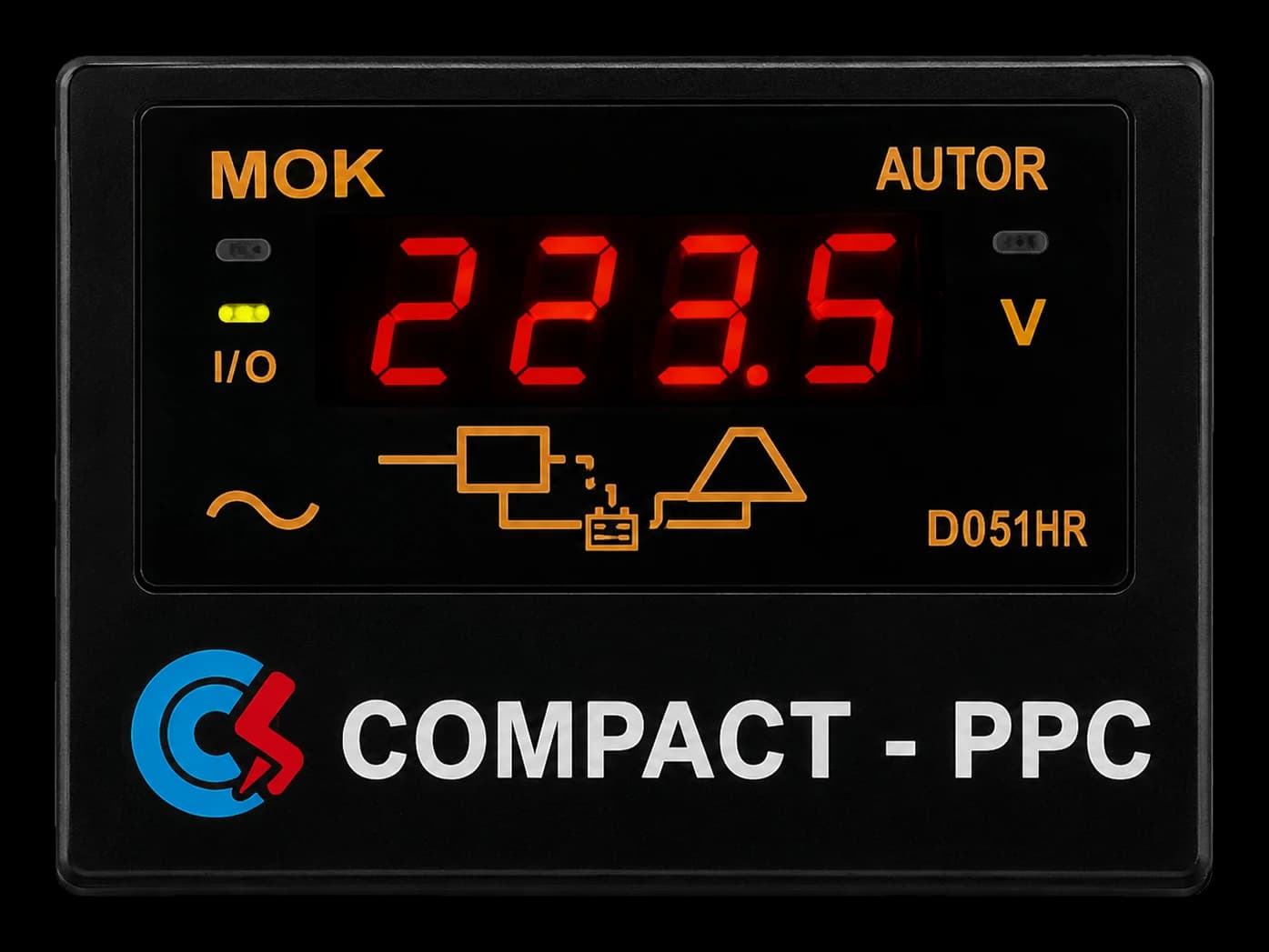
What it is
Supply does not have to fail to damage or disrupt sensitive equipment. Voltage sags, swells, spikes and electrical noise on an otherwise 'working' supply are enough on their own to trip, degrade or shorten the life of electronic and precision equipment — and none of that is what a UPS battery is there to solve.
A UPS protects against interruption; the Precision Power Conditioner (PPC) protects against a poor-quality supply that never actually goes down. The two are complementary, not interchangeable — a site can need conditioning, backup, or both, depending on what the supply is actually doing.
The PPC conditions and stabilises power for sensitive loads using continuous pulse-width-modulation switching of a buck-boost transformer, driven by a DSP-controlled IGBT converter engine — with no moving parts. It corrects sags, swells and spikes and holds the output within ±1% of nominal, with a voltage-correction time under 20 milliseconds. It is built to withstand industrial environments yet is gentle enough for delicate electronic and computer equipment.
What it does
Correction under 20 ms
Corrects incoming voltage in less than 20 milliseconds (the catalogue also states a 600 V/sec correction speed) — fast enough to ride through sag and swell cycles.
±1% output
Constant output voltage held within ±1% of nominal, independent of load power factor.
Solid state — no moving parts
DSP and IGBT devices only; no carbon brushes, no servo motor, no routine mechanical wear.
Inbuilt surge / spike / sag protection
One device covers the common power-quality problems without a separate isolation transformer.
Handles regenerative loads
Comfortably supports regenerative loads that make a servo stabiliser unsteady.
High efficiency, air-cooled
Efficiency greater than 98% (three-phase) / 99% (single-phase); air-cooled design even at large ratings.
The engineering value
A replacement for the servo stabiliser
The PPC typically corrects incoming voltage in less than 20 milliseconds, compared with a servo stabiliser that can take 2,000–3,000 milliseconds (about 2–3 seconds) — and a servo creates a high-voltage surge immediately after a sag. The PPC holds ±1% throughout. Full comparison below.
No mechanical failure mode
Servo stabilisers depend on moving parts — carbon brushes that wear and can jam. The PPC has none, so reliability does not degrade with hours run.
One box for power quality
Surge and spike protection is inbuilt. A servo installation typically needs an external isolation transformer to curb spikes and the noise the servo itself creates.
Where it fits
Typical applications for this range — not an exhaustive list.
- CNC and precision production machinery
- Printing and packaging lines
- Medical imaging and laboratory equipment
- Multi-machine environments with regenerative loads
- Any load that needs precise, conditioned voltage but not battery backup
Continuous PWM buck-boost
A high-frequency IGBT converter engine drives a buck-boost transformer, adding or subtracting voltage continuously to hold the output constant.
When the input sags or swells, the converter pulls the waveform back inside a tight band within 20 milliseconds — fast enough to keep sensitive equipment inside its tolerance envelope.
Model line-up
Real model designations and capacities transcribed from COMPACT's catalogue.
| Configuration | Capacity | Input range | Output voltage | Efficiency |
|---|---|---|---|---|
| Single-phase | 5–30 kVA | 170–270 V (140–280 V) | 220 / 230 / 240 V settable | > 99% |
| Three-phase (unbalanced) | 10–300 kVA | 340–470 V (300–480 V) | 400 / 415 / 380 V settable | > 98% |
Single-phase
- Capacity
- 5–30 kVA
- Input range
- 170–270 V (140–280 V)
- Output voltage
- 220 / 230 / 240 V settable
- Efficiency
- > 99%
Three-phase (unbalanced)
- Capacity
- 10–300 kVA
- Input range
- 340–470 V (300–480 V)
- Output voltage
- 400 / 415 / 380 V settable
- Efficiency
- > 98%
The PPC is configured to the site rather than sold as discrete models. Detailed spec — single-phase 5–30 kVA, three-phase 10–300 kVA — per the Enterprise PPC brochure and the corporate deck portfolio slide; the PPC brochure cover / deck PPC slide also carry a 5–500 kVA headline (VERIFY — SOURCE CONFLICT).
PPC vs servo stabiliser / AVR
| Feature | COMPACT PPC | Servo stabiliser / AVR |
|---|---|---|
| Voltage correction speed | < 20 ms (catalogue also states 600 V/sec) | 2,000–3,000 ms (about 2–3 seconds); cannot control sag cycles; creates a high-voltage surge immediately after a sag |
| Output | ±1% constant | Constant only in steady state; unstable under sudden fluctuation |
| Regenerative loads | Handled comfortably | Becomes unsteady |
| Topology | Solid-state, no moving parts | Moving parts (carbon brush etc.); frequent maintenance; brush-jam risk |
| Surge / spike protection | Inbuilt | Not inbuilt — needs an external isolation transformer; servo also creates micro-sparks and electrical noise |
Voltage correction speed
- COMPACT PPC
- < 20 ms (catalogue also states 600 V/sec)
- Servo stabiliser / AVR
- 2,000–3,000 ms (about 2–3 seconds); cannot control sag cycles; creates a high-voltage surge immediately after a sag
Output
- COMPACT PPC
- ±1% constant
- Servo stabiliser / AVR
- Constant only in steady state; unstable under sudden fluctuation
Regenerative loads
- COMPACT PPC
- Handled comfortably
- Servo stabiliser / AVR
- Becomes unsteady
Topology
- COMPACT PPC
- Solid-state, no moving parts
- Servo stabiliser / AVR
- Moving parts (carbon brush etc.); frequent maintenance; brush-jam risk
Surge / spike protection
- COMPACT PPC
- Inbuilt
- Servo stabiliser / AVR
- Not inbuilt — needs an external isolation transformer; servo also creates micro-sparks and electrical noise
Technical specification
Transcribed from COMPACT's product catalogue.
| General | |
|---|---|
| Cooling | Air cooling |
| Output voltage regulation | 1% of nominal output voltage |
| Input frequency range | 47 Hz – 53 Hz |
| Effect of load power factor | Nil |
| Waveform distortion | Nil |
| Controller | DSP-based IGBT technology |
| Voltage correction speed | Corrects in < 20 ms; catalogue also states 600 V/sec — both describe correction speed |
| Protection | |
| Under / over-voltage cut-off | Electronic cut-off circuit with graded time delay |
| Overload cut-off | CT-based electronic cut-off, graded delay, set at 110% of rated full-load current |
| Short-circuit protection | Electronic cut-off / MCB (1-ph) · MCCB (3-ph) |
| Single-phasing prevention | Provided (three-phase) |
| Phase-reversal trip | Provided (three-phase) |
| Input high-voltage trip | Provided |
| Resetting mode | Manual / auto option provided |
| Bypass & terminations | |
| Stabiliser bypass | Provided (3-ph: standard up to 50 kVA, optional above) |
| Auto bypass | Provided (single-phase) / optional (three-phase) |
| Display | Programmable; shows input and output parameters |
| Input / output terminations | Connector (1-ph); bolted terminals up to 100 kVA, bus bar 125 kVA and above (3-ph) |
General
- Cooling
- Air cooling
- Output voltage regulation
- 1% of nominal output voltage
- Input frequency range
- 47 Hz – 53 Hz
- Effect of load power factor
- Nil
- Waveform distortion
- Nil
- Controller
- DSP-based IGBT technology
- Voltage correction speed
- Corrects in < 20 ms; catalogue also states 600 V/sec — both describe correction speed
Protection
- Under / over-voltage cut-off
- Electronic cut-off circuit with graded time delay
- Overload cut-off
- CT-based electronic cut-off, graded delay, set at 110% of rated full-load current
- Short-circuit protection
- Electronic cut-off / MCB (1-ph) · MCCB (3-ph)
- Single-phasing prevention
- Provided (three-phase)
- Phase-reversal trip
- Provided (three-phase)
- Input high-voltage trip
- Provided
- Resetting mode
- Manual / auto option provided
Bypass & terminations
- Stabiliser bypass
- Provided (3-ph: standard up to 50 kVA, optional above)
- Auto bypass
- Provided (single-phase) / optional (three-phase)
- Display
- Programmable; shows input and output parameters
- Input / output terminations
- Connector (1-ph); bolted terminals up to 100 kVA, bus bar 125 kVA and above (3-ph)
Consider alongside
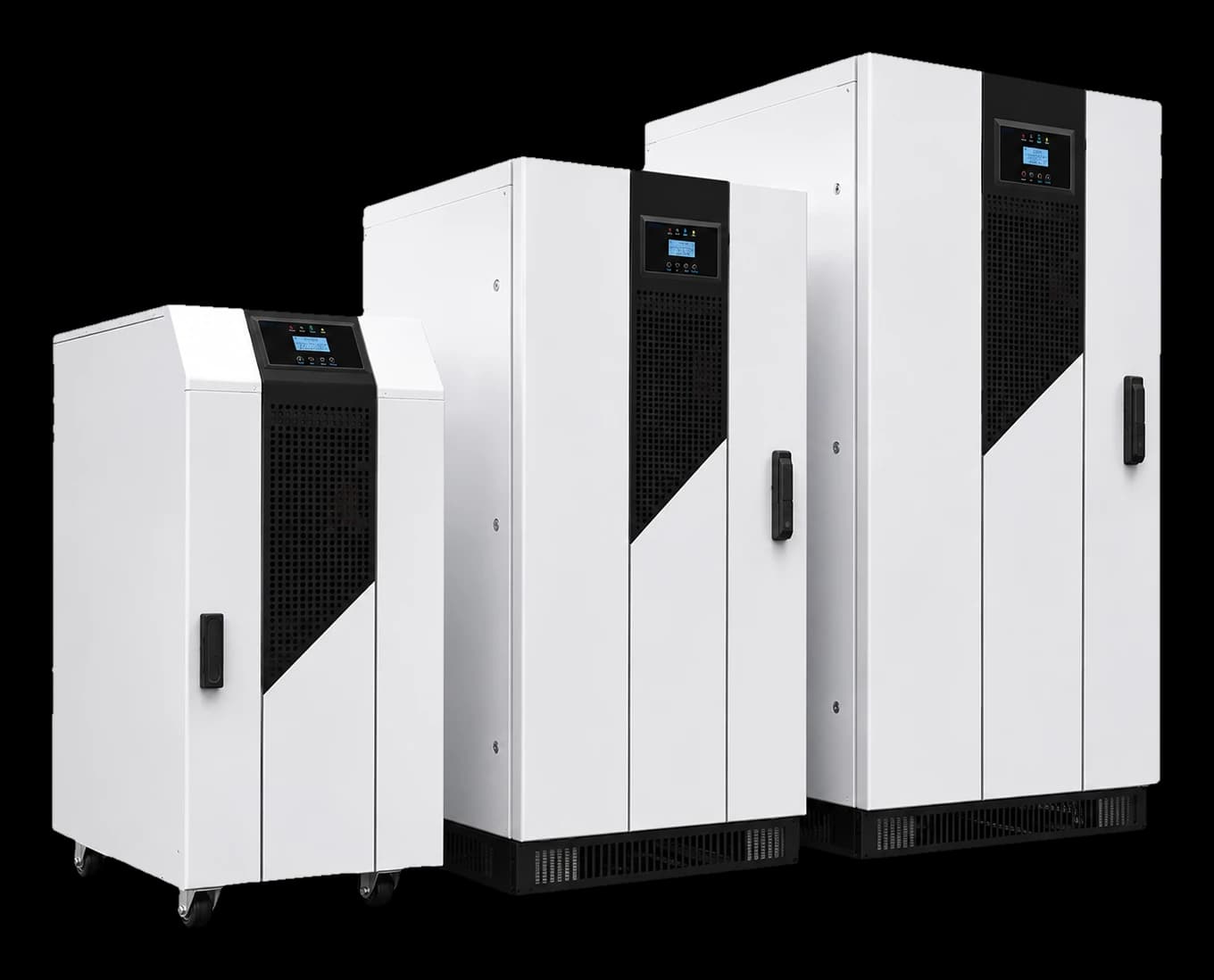 20–300 kVA
Enterprise Classic
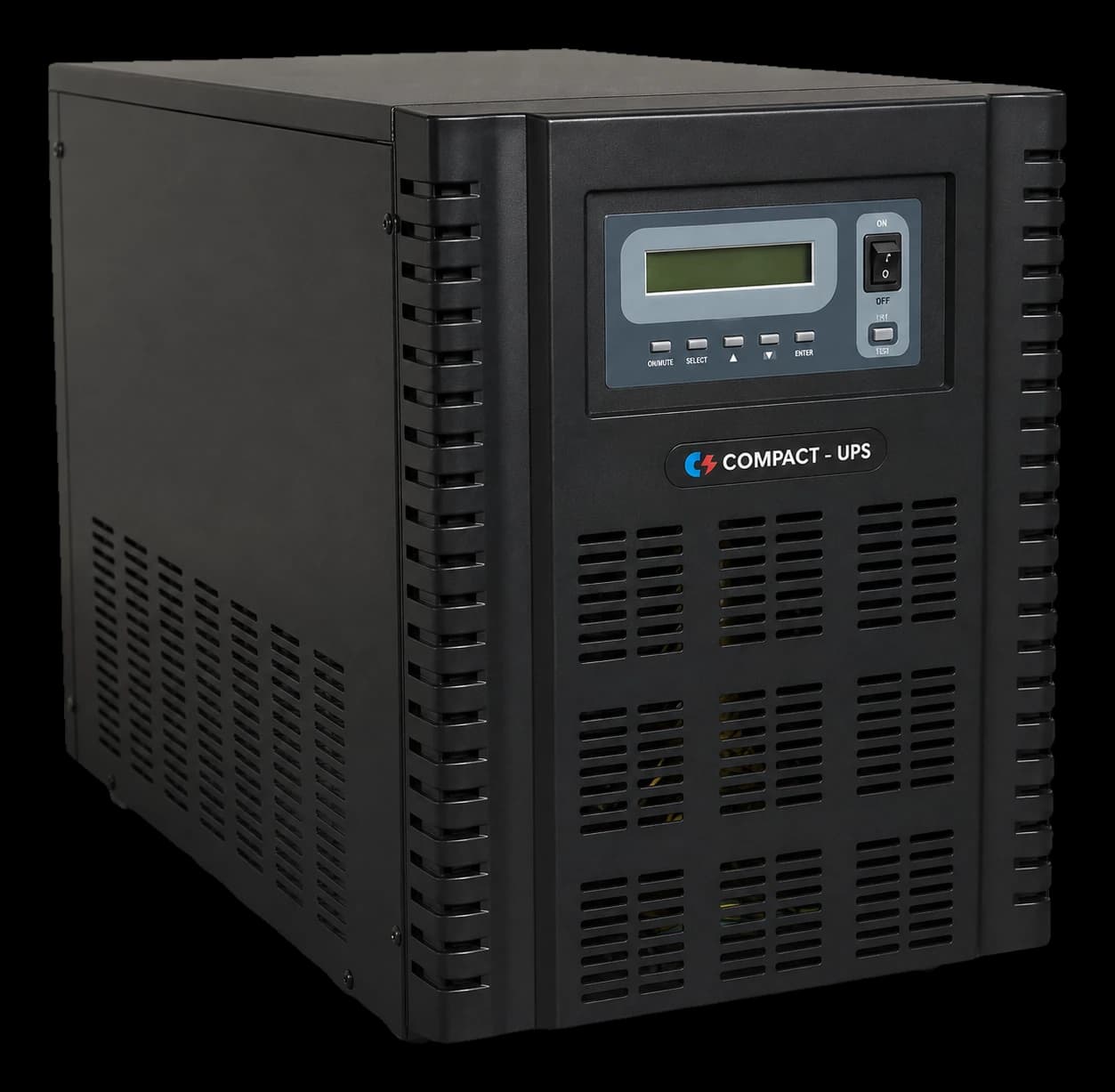
Three-phase online double-conversion UPS, transformer-based with output galvanic isolation — 20–300 kVA.
 5–20 kVA
Enterprise T-Series
Transformer-based online UPS — a physical barrier between volatile input and sensitive, expensive load.
Batteries
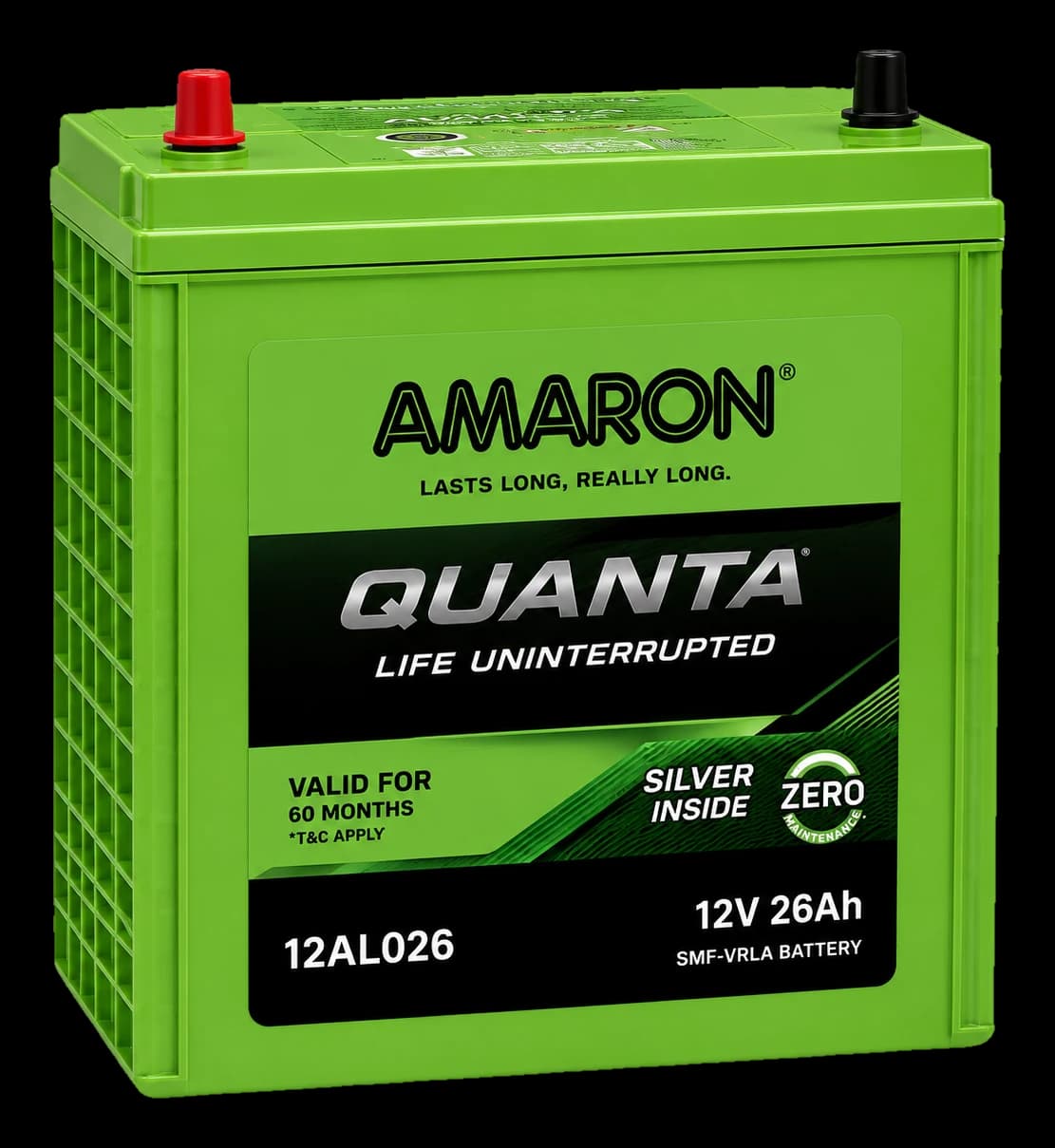
SMF, tubular and lithium-ion battery banks, sized and maintained to your backup requirement.
Talk to us to uncover the hidden problems
Tell us the load, the site and the supply. COMPACT's pre-sales team will confirm whether PPC is the right fit — and flag anything else the site needs that a spec sheet alone would miss.